Vestaboard
A true-3D product studio for a split-flap display maker
- A true-3D product studio in the browser: type, orbit, render
- A browser split-flap simulator with an embeddable board and a live composer
- Path-traced stills, turntables and video export for marketing
- Browser, fully local
- Marketing and web
- Three.js
- Path tracing (three-gpu-pathtracer)
- Cinema 4D
The problem
Vestaboard makes split-flap displays — a mechanical board in Palo Alto that spells messages one flap at a time. Every new angle, message, or finish for marketing meant another render from the 3D file: a queue of stills that could never keep up with the ideas, and a per-angle cost on every one.
What was built
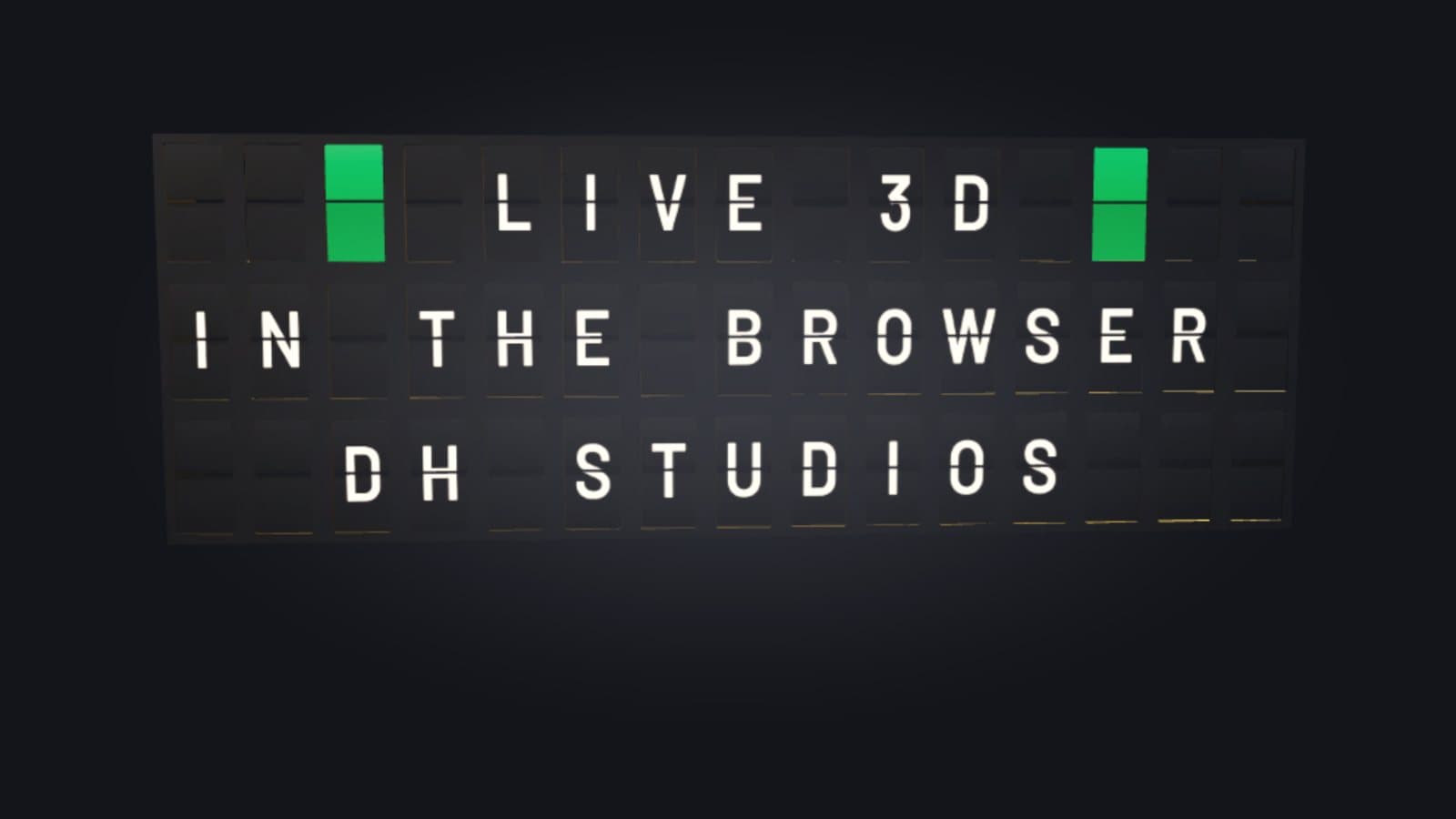
A true-3D product studio that runs in the browser: load the board model, type a message on the real 64-symbol drum, orbit to any angle, and export path-traced stills and turntables — render-farm finish from a laptop, with nothing leaving the machine. It replaces per-angle renders with a board you can simply turn.
Alongside it, a browser split-flap simulator with every board transition, an embeddable board, a live composer, and video export for marketing.
How it renders
The board is the client's own model, and the message is the real drum: 64 positions in the order the physical board steps through them, with the colour chips and the heart where the product has them. For finals, a path tracer takes over from the real-time view with the same lighting, so what you frame is what you get. The demo on /3d runs the same drum on the same geometry and takes it one step further — every cell a two-piece flap stepping forward, the mechanism the planned flip animation is built on. Type on it.
What's next
Mechanical split-flap animation in true 3D — the forward-only drum with the board's own staggered transitions — and deterministic offline encoding, so the flip itself exports as video.
- DESIGN AND BUILD
- DH Studios